Bright Data Review: Is It Still the Top Proxy Solution in 2025?


Bright Data is one of the most well-known names in the proxy industry. With a vast IP pool, advanced targeting options, and enterprise-grade features, it's often considered the gold standard for web data collection. But in recent years, with growing competition and rising costs, many users are asking the same question: Is Bright Data still worth it?
In this Bright Data review, we'll dive into our hands-on experience with the service, covering real-world performance, speed, pricing, use cases, and key pros and cons. Whether you're a developer, data analyst, or business owner looking for a reliable proxy solution, this review will help you decide if Bright Data is the right fit or if more flexible alternatives like IPcook might better suit your needs.
What Is Bright Data and Who Is It For?
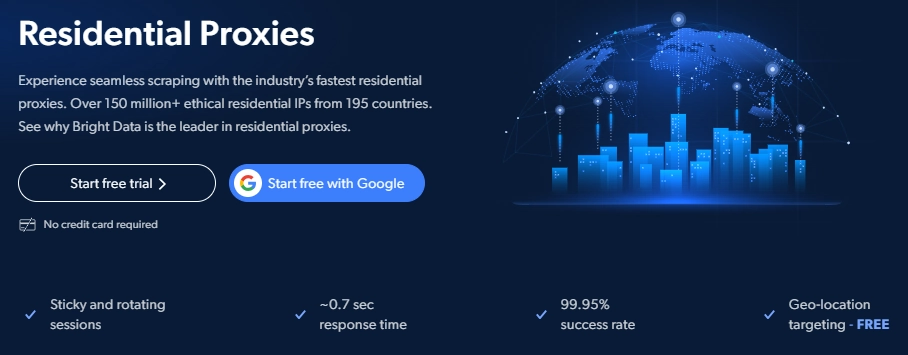
Bright Data, formerly known as Luminati, has evolved into one of the most comprehensive and enterprise-focused proxy providers in the market. It offers a wide array of proxy solutions, including residential proxies, datacenter proxies, ISP proxies, and mobile proxies, each tailored to specific use cases like market research, SEO monitoring, and data scraping at scale.
Pricing Plans
Bright Data Proxy operates on a usage-based pricing model, where the cost depends on proxy type, bandwidth usage, and targeting precision. For example, Bright Data residential proxies start at around $4 per GB, with additional charges for advanced features like city-level targeting or session control. There is no free trial, and access to certain capabilities, such as the Proxy Manager or API integrations, often requires enterprise approval or onboarding.
This makes Bright Data a go-to choice for large-scale data collection teams, anti-ad fraud operations, and digital intelligence firms that need global coverage and robust compliance tools. But it also raises a fair question: if you're a solo developer, small team, or someone who just needs reliable proxies for basic tasks, is Bright Data simply too complex or too expensive for your actual needs?
Bright Data Features You Should Know
When evaluating a high-end proxy provider like Bright Data, it's crucial to understand not just its pricing or popularity but also the advanced features that make it stand out, particularly if you're planning to invest in Bright Data residential proxies. Below are some of the most important capabilities that define its value in real data collection.
Massive Proxy Network Coverage
Bright Data boasts one of the largest proxy infrastructures in the world, with over 150 million residential IPs across 195+ countries. It allows highly granular targeting, down to ASN, city, and ISP-level, making it ideal for precision scraping and localized testing.
That said, if your needs are less enterprise-heavy and more task-specific, solutions like IPcook may offer a better cost-to-performance ratio. IPcook also provides residential proxies in over 185 countries, with flexible IP rotation and long session durations, features that many smaller teams or solo developers find more budget-friendly for lightweight operations.
Smart Routing and AI Integration
One of Bright Data's strongest suits is its intelligent routing system. The platform automatically routes requests through the most optimal IPs based on location, performance, and uptime. For enterprise users, Bright Data also offers access to AI-driven tools and proxy agents that can autonomously carry out scraping tasks without manual IP logic setup, saving time on infrastructure development.
This level of automation and optimization makes Bright Data ideal for businesses handling millions of requests per day or those needing self-healing, long-term data extraction setups.
Targeting Options and Ethical Sourcing
Bright Data sets a benchmark for ethical proxy sourcing. All residential IPs are sourced from users who explicitly consent to share bandwidth in exchange for app benefits, ensuring compliance with privacy laws such as GDPR and CCPA.
Combined with city-level targeting, ASN filters, and clear usage reporting, this focus on transparency gives enterprises peace of mind when operating in heavily regulated environments.
Real Test: How Does Bright Data Work?
When it comes to choosing a proxy provider, theoretical features are one thing, but real-world performance is what truly matters. In this section of our Bright Data review, we test how well the platform performs across key metrics: speed, reliability, anti-detection, and ease of integration.
Speed and Latency (Across Locations)
In our tests, Bright Data residential proxies showed an average latency of 0.7 seconds, which is fairly standard for rotating residential IPs routed through consumer networks. However, its datacenter proxies performed much faster, with latency as low as 0.24 seconds, making them suitable for speed-sensitive tasks like real-time price monitoring or sneaker botting.
Thanks to extensive infrastructure and smart routing, uptime stability reached 99.99%, even under concurrent sessions. This makes Bright Data a dependable choice for high-volume operations that require consistent IP availability and session longevity.
Success Rate and IP Detection
Bright Data consistently delivers over 99.95% success rate in request completions. That means your sessions are rarely interrupted by CAPTCHAs, bans, or blocks—especially when using residential proxies, which blend in seamlessly with real-user traffic.
This high success rate is a key reason why Bright Data remains the go-to choice for businesses engaged in web scraping, ad verification, and anti-fraud monitoring, where stealth and reliability are essential.
Integration With Tools
One of the highlights of Bright Data is how easily the service integrates with popular scraping frameworks. Whether you're using Scrapy, Selenium, Puppeteer, or Playwright, Bright Data offers prebuilt libraries, browser extensions, and API documentation to help you get started quickly.
That said, these integrations are best suited for users with a certain level of technical experience. If you're a solo developer or just getting started, the platform's robust feature set may come with a steeper learning curve.
Bright Data Pros and Cons: Is It Worth It?
After thorough testing and hands-on comparisons, here's a summary of where Bright Data excels, and where it may fall short for certain users.
Pros
Massive residential IP pool with over 150 million addresses
Offers multiple proxy types: residential, datacenter, ISP, mobile
Granular targeting, AI-based routing, and ethical sourcing
Enterprise-grade uptime and reliability, with success rates near 100%
Cons
Pricing starts high, and plans can become complex to calculate
Steep learning curve for new users unfamiliar with proxy infrastructure
No free trial, and the service is built with enterprise budgets in mind
A Smarter Choice: IPcook Residential Proxies
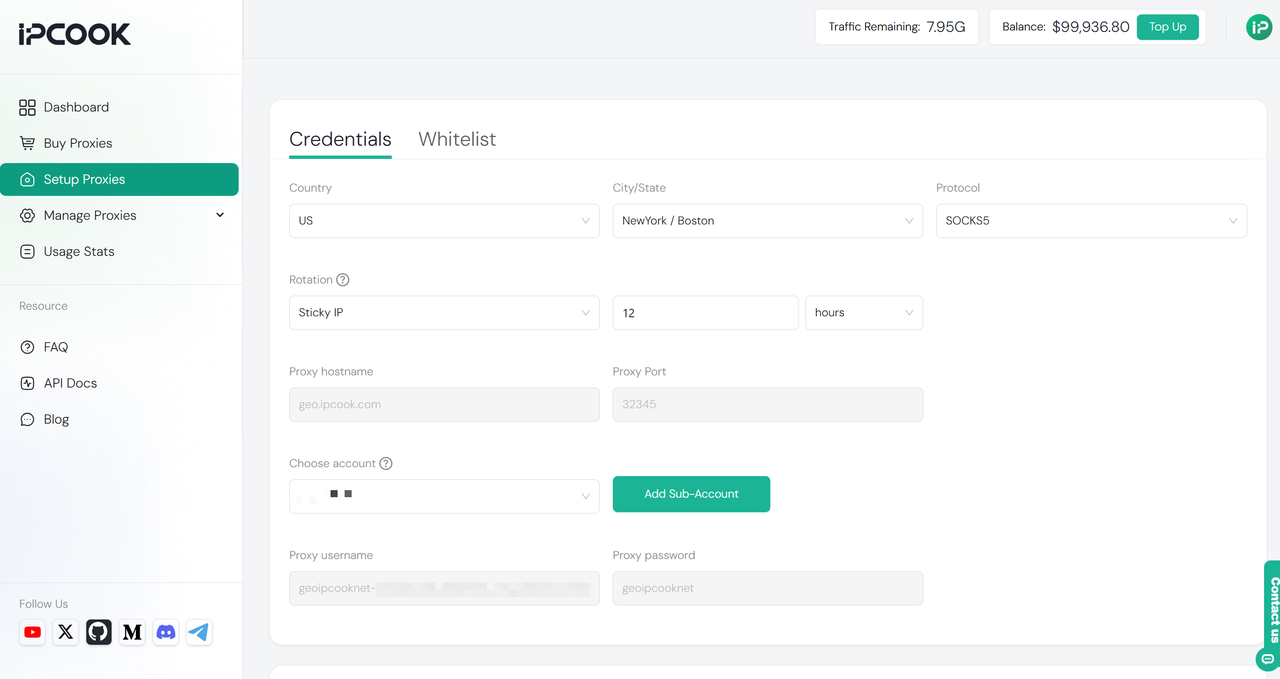
If you're a solo developer, a startup, or run lightweight scraping tasks, Bright Data might be overkill, both in features and cost. This is where IPcook offers a more accessible and flexible alternative.
IPcook residential proxies are designed with ease of use and affordability in mind. With support for HTTPS and SOCKS5, and coverage across 185+ countries, IPcook delivers high anonymity, long session times, and reliable IP rotation, all without the enterprise overhead. You can get started at just $3.2/GB and pay as you go, without long-term contracts or subscriptions.
IPcook vs Bright Data: Which Proxy Works Better?
If you're a mid-sized developer, cross-border eCommerce merchant, or ad verification freelancer, using IPcook is arguably a more practical option, providing stable residential proxies with great flexibility and value.
To make it easy to understand these 2 tools mentioned above, we've made this comparison table as follows:
Feature | Bright Data | IPcook |
Starting Price | ~$4/GB (residential) | $3.2/GB, no subscription |
Pricing Model | Complex, often enterprise-tier | Simple, pay-as-you-go |
Proxy Types | Residential, ISP, Datacenter, Mobile | Residential, ISP (partial) |
Supported Protocols | HTTP, HTTPS, SOCKS5 | HTTPS, SOCKS5 |
Global Coverage | 195+ countries | 185+ countries |
Session Control | Yes | Yes (auto/manual rotation) |
Tool Compatibility | High | High (Scrapy, Selenium, etc.) |
Learning Curve | Steep | Beginner-friendly |
Target Users | Enterprises, data firms | SMBs, indie devs, ecom, media buyers |
✴️ Related Readings
How to Use Residential Proxies Like a Pro [Step-by-Step Guide]
Top Residential Proxies for Web Scraping, SEO & Automation
Final Verdict
So, is Bright Data worth it in today's proxy landscape? The answer depends entirely on your scale and goals. For enterprises, data research firms, and large-scale scraping operations, Bright Data remains one of the most robust and reputable platforms in the market. Its vast proxy pool, advanced targeting, and enterprise-grade infrastructure make it a powerful tool for heavy-duty tasks and long-term deployment.
However, if you're running a small to mid-sized project, experimenting with ad verification, or simply need a cost-effective and flexible solution, Bright Data might be more than you need, both in capability and cost. In that case, services like IPcook offer a refreshing alternative: affordable residential proxies, easy integration, and global IP coverage, starting at just $3.2/GB, no subscription required.