What is Anonymous Proxy: Definition, Benefits, and Use Cases

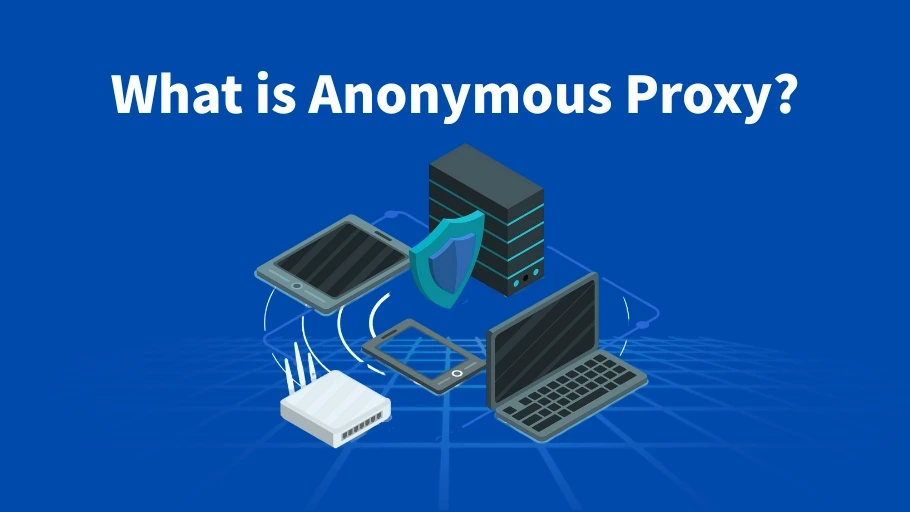
An anonymous proxy, also known as an anonymizer, often acts as a critical intermediary between your device and the internet. It works by masking your real IP address, so that websites cannot identify your personal information or location. Therefore, you can bypass geo-restrictions or scrape publicly available data efficiently without being detected.
The article below provides a clear definition of an anonymous proxy along with its specific benefits. We will further examine different anonymity levels and practical use cases. Continue reading to learn how to secure your online presence effectively.
What is an Anonymous Proxy
A proxy server works like a helpful middleman between your computer and the internet. An anonymous proxy is a specialized type of server focused entirely on your privacy. When you connect through it, the proxy's main job is to hide your real IP address. The websites you visit will only see the proxy's information instead of yours. Therefore, nobody knows who you are or where you are located. This mechanism makes you appear "anonymous" to the destination site, protecting your location and enhancing your security.
How Do Anonymous Proxies Work
Anonymous proxy services create a simple path between the user and the website. Instead of connecting directly to a website, your traffic takes a detour through the anonymous proxy. This process ensures that your personal device never communicates directly with the destination server.
Here is the flow of a typical connection:
When you type a website address into your browser, your computer first sends that request to the proxy server instead of the website.
The proxy receives the request and removes the user's identifying IP address.
The proxy sends the request to the destination website using its own address.
In this way, your real IP address and physical location remain completely hidden from the target website. The site only sees the proxy's details. However, depending on the specific anonymity level, some proxies might still accidentally leave subtle information (e.g., "headers") that reveal you are using a proxy.
Levels of Proxy Anonymity
Now that you know how an anonymous proxy works, it is important to understand that not all proxies offer the same level of protection. The key difference among proxy types lies in how they handle your HTTP headers. Headers are small pieces of information sent along with the request, and they may show the user's real IP address or reveal that a proxy is being used.
Proxy servers are typically divided into 3 main levels, based on the anonymity they provide:
Proxy Type | Anonymity Level | What it Hides | What May Still Be Visible |
Transparent Proxy | Low / None | None of the key details | Real IP in the |
Standard Anonymous Proxy | Medium | Real IP and location | Some headers that show the request comes through a proxy. |
Elite/High Anonymity Proxy | Maximum | Real IP, location, and most proxy-related headers | Very little information that could reveal proxy use. |
Among these 3 types of anonymous proxies, elite proxies are often used for enhanced privacy and anonymity. They help with bypassing geo restrictions and censorship because websites see only the proxy's IP. In addition, this level reduces tracking and improves security, which is useful for tasks such as viewing region-specific content on Hulu or scraping data.
Benefits of Using an Anonymous Proxy Server
Using an anonymous proxy server provides more control over your online activity. Generally, they offer 3 major advantages for almost any online activity.
Enhanced Privacy and Anonymity: An anonymous proxy hides your real IP address and location. It prevents websites and advertisers from tracking your activity. It also limits the amount of personal information shared online. This is crucial for keeping your personal data secure.
Bypassing Geo-Restrictions and Censorship: Since the website sees the proxy's IP address, you can choose a proxy located in a different country. This makes it look like you are browsing from that region, allowing you to access region-locked content, news, or services that would normally be unavailable to you.
Improved Security and Reduced Exposure to Tracking: With an anonymous proxy service, your device isn't directly exposed to the internet, which reduces your vulnerability to certain malicious attacks.
Common Use Cases for Anonymous Proxies
Anonymous proxies provide practical solutions for both everyday users and those working with large amounts of data.
For Personal Privacy and Access
Bypass Geo-Restrictions: You can choose a proxy in a different country. This allows you to access region-locked content, such as streaming services, news, or specific online stores.
Enhance Online Security: The proxy prevents your home IP address from being directly exposed to the internet. For sensitive tasks like online banking or logging into secure accounts, this adds an important layer of defense.
Avoid Targeted Tracking: By frequently changing the IP address visible to tracking companies, you can significantly reduce the amount of personalized data collected from your browsing habits.
For Business and Data Professionals
Web Scraping and Market Research: Using a pool of different IPs allows researchers to gather massive amounts of data without triggering IP bans. It is perfect for gathering competitor product reviews or scraping pricing information.
SEO and Local Rank Tracking: Companies use proxies set to specific cities to check search rankings. This ensures that their Search Engine Optimization efforts are performing correctly in all target regions.
Ad and Brand Verification: Proxies enable businesses to verify that their advertisements are displaying correctly on publisher sites in different regions. Furthermore, they help monitor marketplaces for the unauthorized sale of copyrighted or counterfeit products.
Competitive Intelligence: Proxies allow businesses to anonymously monitor competitor websites, analyze their strategies, and view
How to Fix "Anonymous Proxy Detected" Error
Sometimes websites show an "Anonymous Proxy Detected" message. This happens when the site notices that your connection is coming through a proxy server. It can stop you from accessing content or completing certain actions online.
Common Reasons for the Error
Low Anonymity Level: You may be using a standard anonymous proxy instead of an elite proxy. The standard type hides your IP but may still send certain request headers that signal to the website that an intermediary server is involved.
Poor IP Reputation: The IP address assigned by your proxy provider might have been used for suspicious activity by previous users. Because of this history, the IP is flagged and blocked by major websites.
Datacenter IP Usage: Websites easily recognize IP addresses that belong to commercial datacenter networks. These are often viewed as less trustworthy than residential IPs, which are tied to real home internet connections.
Inconsistent Behavior: Sending requests very quickly will show that the connection is not from a human. Websites detect this unusual pattern and flag the connection as coming from a proxy.
Ways to Fix the Error
Upgrade to Elite Proxy: Always choose an elite proxy or a high-anonymity proxy. These are specifically designed to strip away all identifying headers, making your traffic indistinguishable from a direct connection.
Switch to Residential Proxies: If possible, move away from datacenter IPs. Residential proxies are much harder to detect because they use IP addresses issued by Internet Service Providers (ISPs) in real homes, giving them a much higher trust score.
Rotate Your IP Address: If an IP is flagged, immediately change it. Good proxy providers allow you to easily rotate IP addresses to a fresh, clean IP to continue your work without interruption.
Adjust Request Speed: If you are using automation tools, slow down the rate at which they send requests. Making the traffic pattern look more human drastically reduces the chance of detection.
Choosing the Right Anonymous Proxy from IPcook 🔥
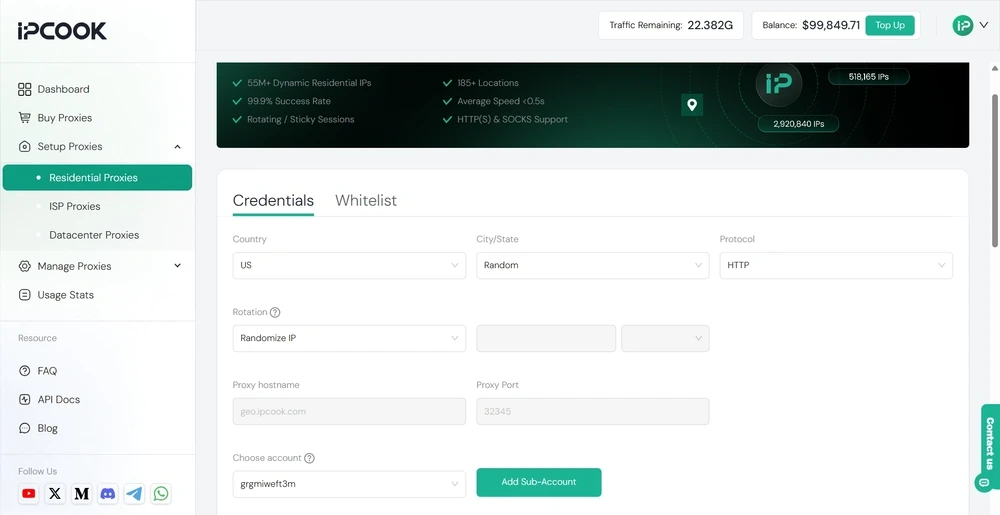
Not all proxies offer the high level of anonymity discussed in this guide. While simple proxies often lead to annoying IP bans and detection errors, high-anonymity proxy servers like IPcook provide the top-tier solution: dynamic residential proxies. These are the equivalent of the elite proxies we mentioned earlier. By using real IPs issued by Internet Service Providers (ISPs), IPcook proxies successfully mimic true user behavior.
Moreover, the IP pool of IPcook is quite large, and the quality is consistently high. This allows you to easily bypass all major detection systems. Therefore, you can enjoy stable long-term operation whether you are scraping data or managing multiple accounts.
👍Key Features of IPcook:
Clean, High-Trust IPs: Addresses are tied to real users, preventing you from being flagged and instantly blocked by target websites.
Large Residential Pool: Access to millions of residential IP addresses across over 185 countries, allowing for precise location targeting.
Flexible IP Control: You can choose between automatic IP rotation to evade detection, or use static residential IPs for uninterrupted login sessions.
Real-User Simulation: This feature helps bypass sophisticated anti-bot checks and fingerprinting systems to ensure smooth access.
Developer-Friendly Compatibility: The service supports common protocols like HTTPS and SOCKS5. It can work seamlessly with popular automation tools like Python and Selenium.
Conclusion
An anonymous proxy is a vital tool for achieving online privacy and accessing the global internet. Understanding the difference between transparent, anonymous, and elite proxies is essential, especially when tackling high-demand tasks like data scraping or market monitoring. For these demanding use cases, you cannot rely on low-quality options. Instead, you need a high-anonymity solution, such as residential IP addresses.
If you are seeking a provider offering high-quality residential IPs, IPcook can be the solution. Its residential proxies offer strong anonymity and reliable performance for both personal and professional needs. Try IPcook today to secure your high-anonymity network.